

Getting a good latch

Source: Global Health Media
Getting a good latch
Getting a good latch is key to good milk production, and having a positive breastfeeding experience. A good latch means that you and your baby are comfortable and milk can be transferred more efficiently.
It is normal to experience some sensitivity in the first few days feeding (think of when you rake leaves first time in months– your hands are a bit more sensitive). However, it should not hurt beyond the first few seconds of the latch, and beyond the first few days.
Three steps to getting a good latch:
Adjust your body: First get comfy and have all your muscles relax (think of your favorite position to read a book or watch a show). Laid back on the couch or comfy in a recliner, or in bed.
Adjust your baby: Bring your baby to you or have a loved one hand the baby to you, so that you can maintain your comfy position. Make sure their belly is against your belly. A good latch starts at the hips. Remember “hips to lips” should aligned and their belly is against your belly. If you see the baby’s belly button, turn their hips against you. Your baby’s arms should be on either side of your breast, helping them get nice and closer for a deep latch.
Adjust your breast: Hold your breast like a sandwich, your hands compressing the breast into the baby’s mouth.
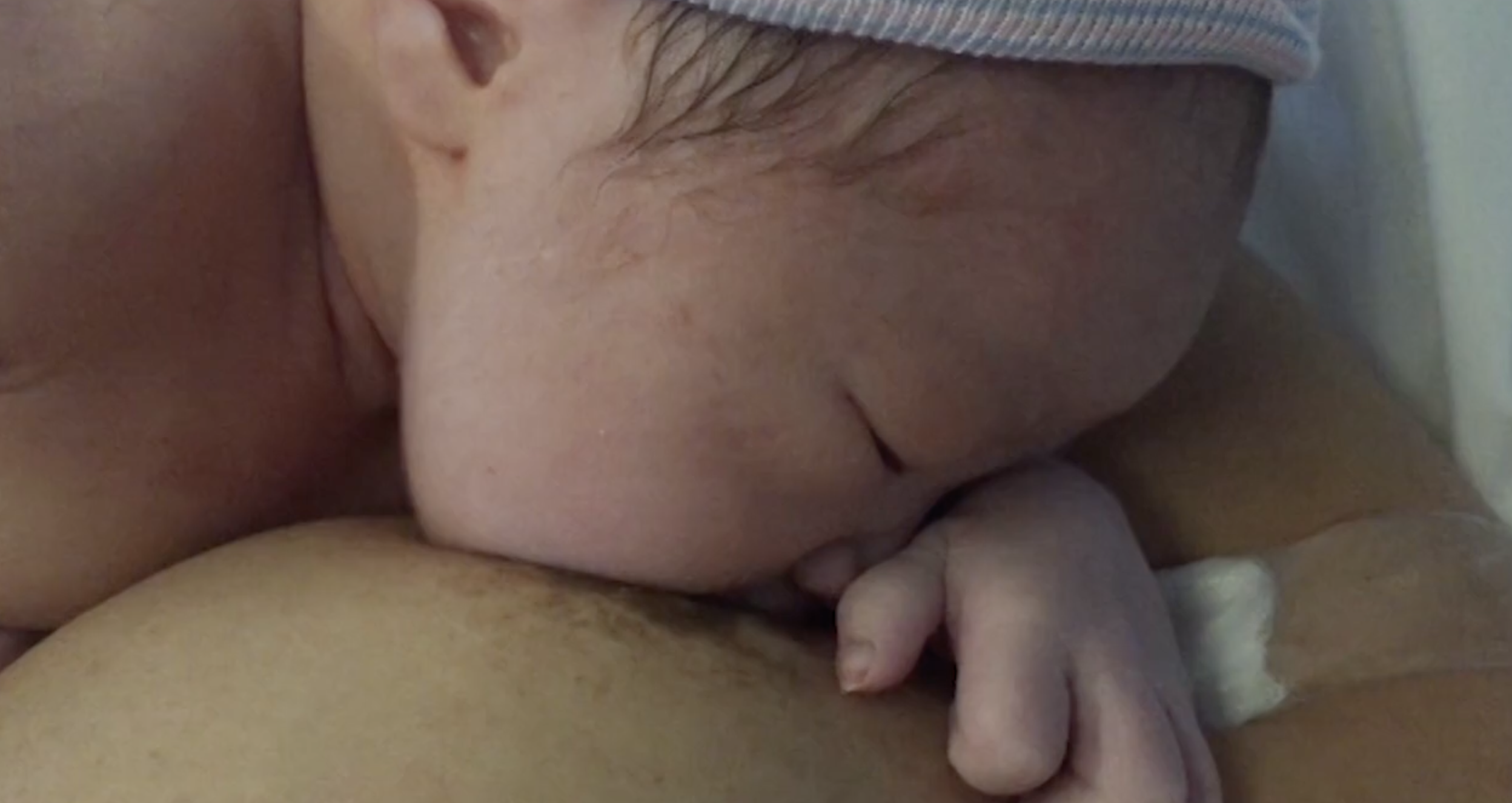
Signs of a good latch
Regardless of the position you hold your baby, the latch remains the same:
Belly button to parent
Deep latch with wide jaw angle (almost like a yawn)
Lips are flanged (rolled out)
Large portion of areola in mouth. More from the bottom of the areola than the top (asymmetrical latch)
Baby’s temples move with sucking. Jaw moves up and down.
Hear milk transfer (suck, swallow, breath)
Minimal pain.
Image Source: Jane Morton, First Droplets

Signs of a poor latch
Nipple pain
Chomping
Sleepy baby
Inconsistent, flutter (weak) sucking
Difficulty latching and staying on
Clicking or popping sounds in your baby’s mouth
Baby is not satisfied at the end of the feeding
Engorgement
Inadequate wet diapers and stools
Has not regained birth weight by 10 days.
Written by Kathleen Stern. For more feeding support, reach out to Kathleen at www.strongnestconsulting.com
Last updated December 14, 2025